
Long Grain vs Short Grain Rice for Biryani: A Simple Guide

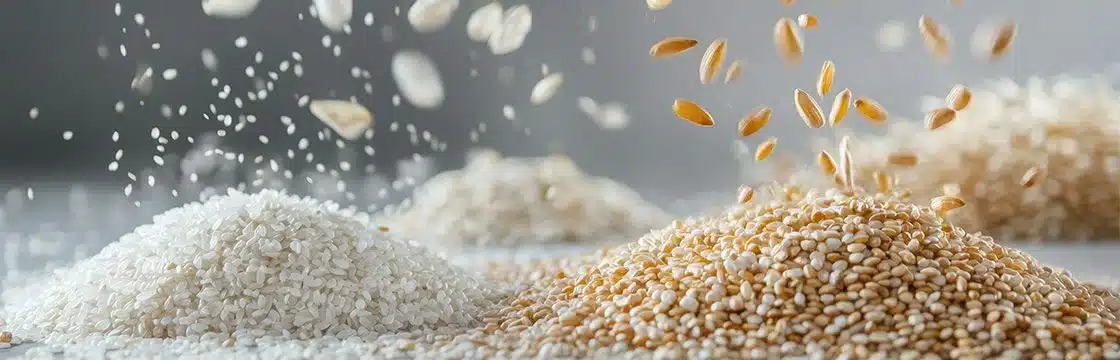
For biryani, long grain rice, especially aged basmati, is the gold standard. Its low starch content, longer cook elongation, and dry, separate texture make it ideal for dum-style cooking. Short grain rice is better suited for sushi, kheer, or risotto. Read on for the full breakdown on long grain vs short grain rice.
Ask any seasoned cook what makes a biryani truly great, and the answer almost always circles back to one thing: the rice. Not the spices, not the marination time, the rice grain. Specifically, whether you pick a long grain rice or a short grain rice can mean the difference between a plate of fluffy, separate, aromatic grains and a sticky, clumped-up disappointment.
This guide breaks down the science and tradition behind both grain types, so you walk away knowing exactly which one belongs in your biryani pot, and why.
What Is Long Grain Rice and What Makes It Different?
Long grain rice is defined by a length-to-width ratio of 3:1 or more. Grains are slender, firm, and stay separate after cooking. The most celebrated variety in Indian cooking is basmati rice, a fragrant, aged variety grown in the Himalayan foothills. When cooked, basmati grains can elongate up to twice their dry length, a quality that no short grain variety matches.
The key behind this behavior is amylose content. Long grain rice carries a higher amylose content, typically 23–26% which resists gelatinisation and keeps grains firm and non-sticky. This is precisely why it’s been the preferred choice for biryani, pulao, and other layered rice dishes across South Asia for centuries.
If you want to understand what makes basmati rice different from other types of rice, including grain structure, aroma compounds, and aging, this India Gate Foods guide covers it in detail.
What is Short Grain Rice and How Does It Behave When Cooked?
Short grain rice varieties, including sona masoori, jeera samba, and gobindo bhog, have a plumper shape and a higher amylopectin content (typically above 30%). Amylopectin is the starch responsible for stickiness. When cooked, short grain rice releases this starch freely, causing grains to cling together.
This is ideal for dishes like curd rice, rice kheer, pongal, or Japanese sushi, applications where a soft, cohesive texture is the goal. But in biryani, where every grain needs to stand separate and absorb flavour without becoming mushy, that same stickiness works against you.
Short grain rice also absorbs water faster and cooks in less time. That can make it harder to time correctly inside a sealed dum pot, where temperature and steam are carefully controlled.
Why Long Grain Basmati is the Right Choice for Biryani
Biryani is not just a rice dish, it’s a technique. The dum method involves sealing the pot and letting rice and meat or vegetables finish cooking together in trapped steam. For this to work beautifully, the rice needs to:
- Absorb spiced cooking liquid without falling apart
- Elongate without sticking grain to grain
- Hold its shape through the dum phase
- Release aroma as it cooks
Long grain basmati rice checks every one of these boxes. The aging process that quality basmati undergoes, typically a minimum of one year, reduces moisture content in the grain, which in turn improves elongation and prevents clumping during cooking. Fresh, unaged rice does not behave the same way, even if the grain length looks similar on the packet.
Choosing the right basmati also matters. Not all long grain rice sold as “biryani rice” is equal, and understanding how to choose the best basmati rice for biryani can make a noticeable difference in texture, aroma, and grain separation.
Long Grain vs Short Grain Rice: A Side-by-Side Comparison
| Property | Long Grain (Basmati) | Short Grain |
| Grain Shape | Slender, elongated | Plump, round |
| Amylose Content | High (23–26%) | Low (<20%) |
| After Cooking | Dry, separate grains | Soft, sticky clumps |
| Cook Elongation | Up to 2x | Minimal |
| Best Use | Biryani, pulao | Kheer, pongal, sushi |
| Dum Cooking? | Ideal | Not recommended |
| Aroma | Distinct (2-acetyl-1-pyrroline) | Mild or neutral |
Does Soaking Rice Before Cooking Matter?
Yes, and it matters differently for long grain vs short grain rice. Soaking long grain basmati for 20–30 minutes before cooking lets the grain absorb water gradually. This means it cooks evenly during dum, elongates fully, and the exterior doesn’t overcook before the centre is done.
Short grain rice, because it absorbs water very quickly, needs far less soaking, often none at all for dishes like pongal or curd rice. Soaking it for 30 minutes can make it overcook easily.
For a complete, tested approach to cooking basmati rice perfectly, refer to this step-by-step guide by India Gate Foods covering water ratios, soaking times, and draining tips for fluffy, separate grains every time.
Can You Use Short Grain Rice for Biryani in a Pinch?
Technically, yes. Practically, you’ll notice the difference. Cooks in certain South Indian regions, particularly for Thalassery biryani in Kerala, use the small-grained Khyma or Jeerakasala rice, a semi-short, aromatic variety that behaves differently from standard short grain. It’s not sticky in the traditional sense, but it does produce a more moist, compact biryani that’s typical of that regional style.
So the nuance is this: short grain rice is not automatically wrong for every biryani. It depends on the regional style you’re making. But if the recipe doesn’t specify a short grain variety, and you’re making a Hyderabadi, Lucknowi, or Kolkata biryani, stick with aged long grain basmati.
Grain Length Alone isn’t Enough. Why Aging Matters?
One of the most overlooked factors in biryani rice selection is aging. A long grain rice that hasn’t been properly aged will still produce stickier, softer results than well-aged basmati. Aging typically done in climate-controlled silos for at least 12 months, reduces the moisture content in the grain. This directly improves:
- Elongation on cooking
- Grain separation after dum
- Aroma intensity (aged rice releases more 2-acetyl-1-pyrroline, the compound responsible for that signature basmati fragrance)
- Resistance to overcooking
India Gate Foods, as a brand under KRBL Limited, one of India’s oldest and largest basmati rice processors, ages its premium variants for extended periods before packaging. This is why India Gate Classic and India Gate Feast Rozzana perform so consistently well in layered rice dishes.
The Bottom Line
The debate between long grain vs short grain rice for biryani isn’t really a debate, it’s a matter of knowing what the dish needs. Biryani demands grains that stay dry, separate, and aromatic through a long, slow cook. That is what long grain basmati rice delivers, and why it has been the rice of choice for this dish across every major regional tradition.
Short grain rice has its own excellent uses in Indian cooking, from payasam to pongal but biryani is not its natural home. Use it there only if you’re deliberately making a regional style that calls for it.
When choosing your basmati for the next biryani, look beyond just “extra long grain” labels. Check for aging, aroma, and the grain’s track record in layered rice cooking. If you’re unsure where to start, Choose India Gate Foods, as it is one of India’s largest basmati rice producers and exporters. With decades of expertise in basmati cultivation, aging, and processing, India Gate brings consistent quality to every grain, from field to kitchen.
FAQ
Is basmati rice always long grain?
Yes. Basmati rice is always classified as long grain rice. Authentic basmati must meet specific grain length requirements under Indian export standards — typically a minimum cooked length of 15 mm. This is one of the features that makes it distinct from other rice types.
Which rice grain is best for Hyderabadi biryani?
Hyderabadi biryani traditionally uses aged long grain basmati rice. The kacchi (raw) biryani method, where uncooked marinated meat is layered with parboiled rice, requires a grain that can withstand the extended dum cooking time without breaking down.
Does grain length affect cooking time?
Yes. Long grain rice generally takes slightly longer to cook than short grain rice, typically 15–18 minutes at a full boil for parboiling before dum, compared to 10–12 minutes for most short grain varieties. This is partly due to higher amylose content and lower initial moisture.
What is the water ratio for long grain basmati vs short grain rice?
Long grain basmati usually works well with a 1:1.5 rice-to-water ratio when parboiled for biryani. Short grain rice typically needs more water, often 1:2, because it absorbs liquid faster and can dry out on the surface before the interior cooks through.
Is short grain rice healthier than long grain rice?
Both have comparable nutritional profiles. However, long grain basmati has a lower glycaemic index (GI) than most short grain varieties, a factor worth noting for those monitoring blood sugar. For a detailed look at the nutritional side of basmati, is a useful read.
Category: Blogs