Which Rice Is Best for Khichdi
October 19, 2026 • 5 min read
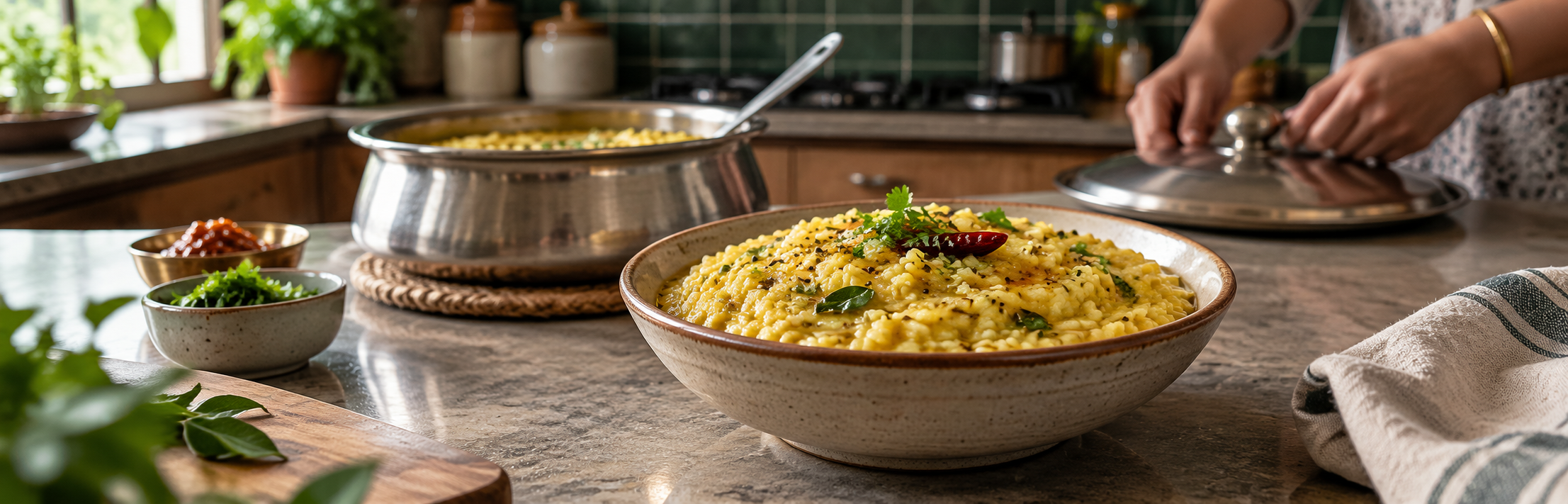
If your last khichdi came out gluey, or so loose it ran across the plate, the rice is the most likely reason. The fix is usually a different grain, not a different recipe.
Khichdi is a texture decision before it is a rice decision. Decide whether you want it soft and creamy or light with visible grains, and the right rice follows.
Key Takeaways
- Short-grain, starchy rice makes the softest, creamiest khichdi.
- Gobindobhog is the traditional rice for Bengali bhoger khichuri.
- Broken basmati such as Mogra gives soft texture with basmati aroma.
- Full-grain basmati keeps grains separate, which suits a lighter, pulao-style khichdi.
Which Rice Is Best for Khichdi?
The best rice for soft, creamy khichdi is a starchy short or medium grain such as Sona Masoori or Kolam. Gobindobhog is the traditional choice for Bengali bhoger khichuri. Broken basmati, sold as Mogra, gives a soft khichdi with a basmati aroma. Full-grain basmati keeps its grains separate and suits a lighter, pulao-style khichdi.
Here is the part most people don't expect. The full-grain basmati many homes save for special meals makes the least traditional khichdi. Broken basmati, the cheaper pack, behaves far closer to the classic, because broken grains release starch quickly and melt into the dal.
Why Does Rice Change How Khichdi Turns Out?
Khichdi depends on the rice giving up starch into the dal. Short and broken grains release starch quickly and soften at the same pace as moong dal, so the two cook into one smooth dish. Long, firm grains hold their shape and stay apart from the dal.
Timing matters too. Split moong breaks down quickly. A long basmati grain is still firm when the dal has already turned soft, so you get smooth dal with separate rice sitting in it. Our guide to long-grain vs short-grain rice explains the starch difference in more detail.
Which Rice Suits Which Khichdi?
Each rice gives a different khichdi, so match the grain to the dish you are making. If you are weighing up regional grains, our comparison of Gobindobhog, Kaima and Kolam rice shows how each behaves in the pot.
| Rice | Texture in Khichdi | Best Suited To |
|---|---|---|
| Sona Masoori / Kolam | Soft, cohesive | Everyday dal khichdi, Gujarati khichdi |
| Gobindobhog | Soft, fragrant, slightly sticky | Bengali bhoger khichuri |
| Broken basmati (Mogra) | Soft with aroma | Festive or Sankranti khichdi |
| Raw rice (pachari) | Soft, mashable | Ven pongal |
| Full-grain basmati | Separate grains | Lighter, pulao-style khichdi |
The pattern is simple. The softer and more traditional the khichdi, the shorter or more broken the grain should be.
Most People Get This Wrong
Using the same water for every rice. Short and broken grains absorb water faster than full-grain basmati. Switch from basmati to Sona Masoori or Mogra without changing anything else, and the khichdi turns thick and heavy. Adjust the water and the dal ratio together.
How Much Rice and Dal Should You Use for Khichdi?
There is no single right ratio. It depends on the texture you want. Equal parts rice and dal give a soft, protein-forward khichdi. Two parts rice to one part dal gives a lighter one.
Water decides the consistency. As a starting point, use 3 to 4 cups of water for every cup of rice and dal combined for a khichdi you can scoop, and 5 to 6 cups for a loose, pourable one. Short grains sit at the higher end. If you are cooking for a family gathering, see how much rice to cook per person for quantities.
Can You Make Khichdi With Basmati Rice?
Yes, but full-grain basmati gives a different khichdi. The grains stay long and separate, the body is lighter, and it won't turn creamy on its own.
If basmati is what you have, two fixes work. Use broken basmati, which softens much faster; Mogra and Mini Mogra rice are both basmati broken during milling. Or cook full-grain basmati with extra water for a few minutes longer, then mash it lightly with the back of a ladle before serving.
Which Rice Should You Choose for Khichdi?
- Soft everyday dal khichdi: Sona Masoori or Kolam.
- Bengali bhoger khichuri for puja: Gobindobhog.
- Festive or Sankranti khichdi with aroma: broken basmati such as Mogra.
- Quick weeknight khichdi: whichever short grain you already cook daily.
- Lighter, grain-forward khichdi: full-grain basmati.
At India Gate Foods, we would point most homes towards two packs: a regional short grain such as India Gate Wada Kolam for everyday khichdi, and India Gate Mogra for the festive one, when you want basmati aroma without losing the soft texture.
Next time a khichdi disappoints, change one thing: the grain. Pick the texture first. The rice follows.
Frequently Asked Questions
Which rice is used for Bengali khichuri?
Bengali bhoger khichuri is traditionally made with Gobindobhog, a short-grain aromatic rice from West Bengal. It cooks soft and slightly sticky, and its sweet, buttery aroma is part of what makes the dish taste right for Durga Puja and other festival offerings.
Can I use basmati rice for khichdi?
Yes. Full-grain basmati keeps its grains separate, so the khichdi turns out lighter and less creamy. For a softer result, use broken basmati such as Mogra, or add extra water and mash the khichdi lightly once it is cooked.
Should rice be soaked before making khichdi?
A short soak helps but is not essential. Soaking rice and dal together lets them cook more evenly. Short-grain rice such as Sona Masoori or Kolam needs only 10 to 15 minutes, while full-grain basmati benefits from 20 to 30 minutes.
Is khichdi made with raw rice or boiled rice?
Most khichdi is made with raw rice, because it softens and blends into the dal. Parboiled, or boiled, rice holds its shape, so it gives a firmer, grainier khichdi. Our guide to raw rice vs parboiled rice explains why.