Which Rice Is Best for Everyday Meals?
October 19, 2026 • 4 min read
Most households pick their daily rice once and never think about it again. But the rice that suits sambar is rarely the one that suits rajma.
The best everyday rice isn't the most expensive pack on the shelf. It's the one that works with the meal you eat most often.
Key Takeaways
- The best everyday rice depends on the dishes you eat it with.
- Sona Masoori and Kolam suit soft, everyday South and West Indian meals.
- Everyday basmati grades suit North Indian dal-chawal and rajma-chawal.
- Parboiled rice suits households that cook in bulk or reheat rice often.
Which Rice Is Best for Everyday Meals?
The best rice for everyday meals depends on what you eat it with. Everyday basmati grades such as Dubar, Tibar or Mogra suit North Indian dal-chawal and rajma-chawal. Sona Masoori and Ponni suit sambar, rasam and curd rice. Kolam suits soft Western Indian meals, while parboiled rice works well for bulk cooking and food that is reheated.
Basmati is not only a festival rice. It is sold in different grades. Full, extra-long grains usually cost more and are often used for biryani. Shorter and broken grains offer basmati aroma at a lower price. For daily meals, the grade you buy can affect your monthly food budget more than whether the rice is basmati at all.
Which Rice Goes Best With Which Everyday Meal?
Match the rice to the dish you eat most often. Thick North Indian dals and rajma work well with firm, separate grains. Sambar, rasam and curd rice suit softer grains that absorb gravy or can be mashed easily. In Maharashtra and Gujarat, Kolam rice plays the same soft everyday role that Sona Masoori plays in many South Indian homes.
| Everyday Meal | Rice That Suits It | Why It Works |
|---|---|---|
| Dal-chawal, rajma-chawal | Everyday basmati (Dubar, Tibar, Mogra grades) | Separate grains and aroma |
| Sambar, rasam rice | Sona Masoori, Ponni | Soft texture and good gravy absorption |
| Curd rice | Sona Masoori, raw short-grain rice | Mashes smoothly |
| Bengali dal-bhaat | Local short- and medium-grain rice, parboiled rice | Soft and filling |
| Bulk cooking or lunchboxes | Parboiled or Sella rice | Holds its shape when reheated |
The last row is easy to overlook. Parboiled rice is partly cooked in its husk before milling. This process firms up the grain, helping it stay separate when reheated the next day. Read our guide to raw rice vs parboiled rice to understand the difference.
A Common Mistake to Avoid
Premium rice is not necessarily the best choice for every meal. Long-grain basmati that lengthens beautifully can be the wrong choice for curd rice, which needs soft grains that mash smoothly. Paying more for the wrong grain can result in a less satisfying dish rather than a better one.
Can You Eat Basmati Rice Every Day?
Yes. Eating basmati every day is a cooking and budget choice, and many North Indian households do exactly that. A practical approach is to choose an everyday grade rather than the extra-long grain you might reserve for biryani.
Basmati grades differ mainly in grain length and the proportion of whole grains. The right grade can give you the aroma and texture you want without paying for premium grains every day. For questions about your individual dietary needs, speak to a doctor or qualified dietitian.
What Should You Look For in an Everyday Rice?
Think about the rice you cook on an ordinary Wednesday, not just on a special occasion. Start with cooking time. A variety that needs a 30-minute soak may not be practical when dinner needs to be ready in 40 minutes.
Next, think about the following day. If lunchboxes or leftovers are part of your routine, choose a grain that holds its shape after reheating. Then consider the gravies you serve. Thin sambar and rasam need rice that absorbs them, while thick dal and rajma pair well with grains that remain distinct.
Finally, compare the cost over a month rather than looking only at the price per pack. A difference of ₹20 per kilogram, when you use 10 kg a month, adds up to ₹200 a month or ₹2,400 a year. That is where an everyday basmati grade can make a difference to your household budget.
Which Rice Should You Choose for Everyday Meals?
Choose rice based on the kind of meals you prepare most often.
- North Indian home: An everyday basmati grade such as Dubar, Tibar or Mogra.
- South Indian home: Sona Masoori or Ponni.
- Western Indian home: Kolam.
- Mixed-cuisine home: Keep two varieties: everyday basmati and a soft short-grain rice.
- Bulk or tiffin cooking: Parboiled or Sella rice.
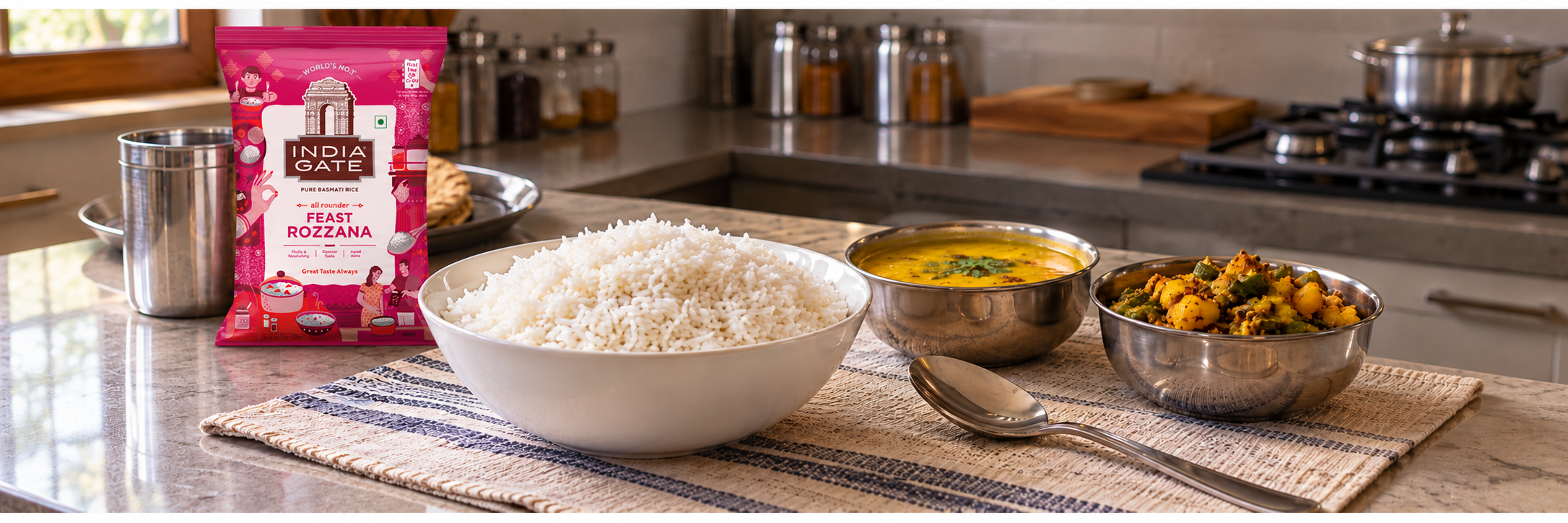
At India Gate Foods, the everyday basmati range includes Tibar, Dubar, Rozzana and Everyday varieties designed for regular dal-chawal meals rather than only biryani. For South and West Indian meals, the regional range includes Sona Masoori and Wada Kolam.
Choose your daily rice based on the meal you cook most often, not just the meal you enjoy on special occasions.