How Many Whistles for Rice in a Pressure Cooker
October 19, 2026 • 5 min read
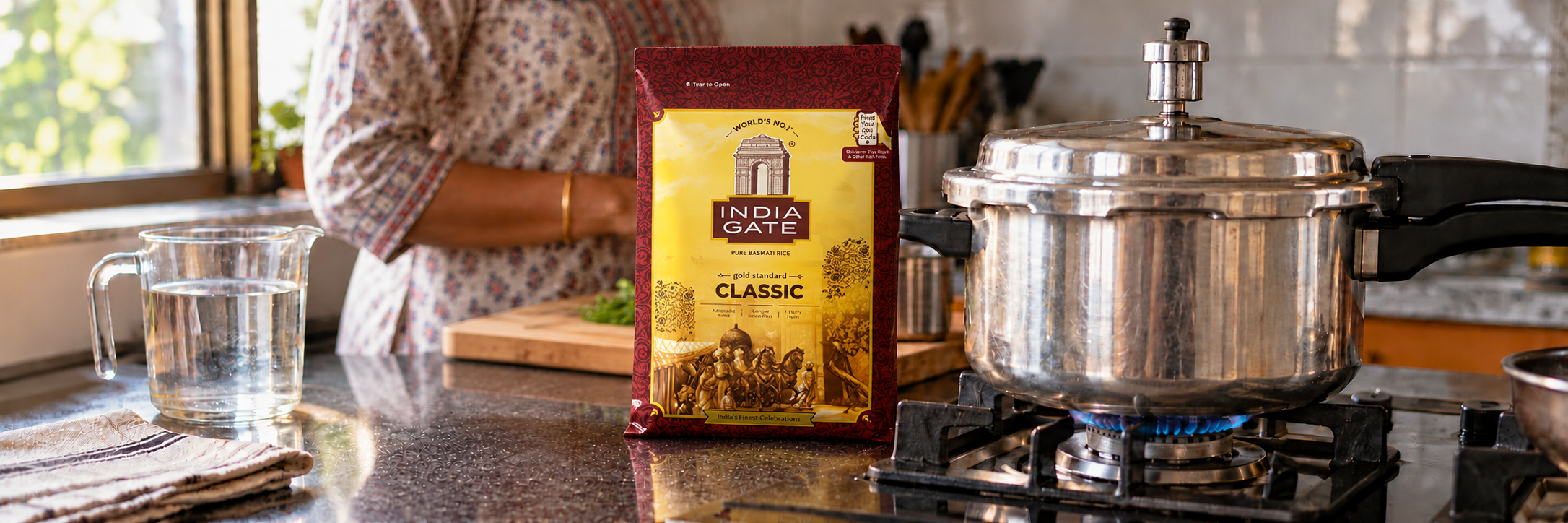
Two to three whistles is the usual answer, and it works for most white rice on a medium flame. But the same count can give soft rice in one kitchen and hard rice in the next.
Key Takeaways
- Most white rice needs about 2–3 whistles on a medium flame.
- Soaked basmati usually needs fewer whistles than unsoaked white rice.
- Parboiled and brown rice need noticeably more cooking time.
- Cooker size matters less than the quantity of rice and water inside it.
- Let the pressure release naturally. The resting time helps finish cooking the rice.
How Many Whistles Does Rice Need?
Most white rice, such as Sona Masoori, needs around 2–3 whistles on a medium flame, followed by natural pressure release. Soaked basmati usually needs 1–2 whistles. Parboiled rice needs 3–5, brown rice needs 5–6 or longer, and khichdi made with rice and dal usually needs 3–4 whistles.
Cooking does not stop at the last whistle. While the pressure drops on its own, the rice continues cooking in the trapped steam. This resting time is part of the process, which is why opening the cooker too early can leave the rice hard in the centre.
How Many Whistles Does Each Type of Rice Need?
The counts below assume a medium flame and a pressure cooker that is no more than half full. The exact time can vary depending on the rice variety, soaking time, water quantity and cooker design.
| Rice Type | Soaking Time | Whistles on Medium Flame | Water-to-Rice Ratio (by Volume) |
|---|---|---|---|
| Sona Masoori / Everyday White Rice | 10–15 minutes | 2–3 | 1.75–2:1 |
| Basmati Rice | 20–30 minutes | 1–2 | 1.5:1 |
| Parboiled / Sella Rice | 30 minutes or longer | 3–5 | 2.5–3:1 |
| Brown Rice | 30 minutes or longer | 5–6 or longer | 2.5:1 |
| Khichdi (Rice + Dal) | Optional | 3–4 | 3–4:1 |
Parboiled rice takes longer because it is processed with the grain partly cooked inside its husk before milling. This makes the grain firmer. Learn more in our guide to raw rice vs parboiled rice.
A Common Mistake to Avoid
Releasing the pressure manually to save time can leave the rice undercooked. Rice continues cooking in the steam as the pressure drops, so wait until the pressure releases naturally before opening the cooker.
Does Cooker Size Change the Number of Whistles?
Cooker size matters less than the quantity of rice and water inside it. The first whistle occurs when pressure builds up. A fuller cooker can take longer to reach the first whistle and may retain heat for longer as the pressure drops.
| Cooker Size | Typical Rice Quantity | Approximate Servings | Whistles for Soaked White Rice |
|---|---|---|---|
| 2-litre | 1 cup | 1–2 people | About 2 |
| 3-litre | 1–2 cups | 2–4 people | About 2–3 |
| 5-litre | 2–3 cups | 4–6 people | About 3 |
| 6.5-litre or larger | 3–4 cups | 6 or more people | About 3–4 |
One cup in this guide means a standard 200 ml cup. For serving-size guidance, read our article on how much rice to cook per person.
Cooker manufacturers generally advise against filling a pressure cooker more than halfway when cooking rice, as rice can froth and block the vent. Always check your cooker's manual. Flame level and cooker design can also affect the whistle count, which is why a timed cooking method can be more dependable.
Is There a More Reliable Way Than Counting Whistles?
Yes. Instead of counting every whistle, you can time the cooking from the first whistle. This method can be particularly useful for basmati, parboiled and brown rice.
- Rinse the rice and soak it for the recommended time in the table above.
- Add the measured water, close the lid and cook on a high flame until the first whistle.
- Lower the flame and cook for a set time: about 2 minutes for basmati, 3–4 minutes for white rice, 8–10 minutes for parboiled rice and 15–20 minutes for brown rice.
- Switch off the flame and allow the pressure to release naturally, usually for 10–15 minutes.
- Open the lid only after the pressure has released completely, then gently fluff the rice with a fork.
Never force the lid open or lift the pressure regulator while pressure remains inside the cooker. Follow the safety instructions provided by your cooker manufacturer.
How Do You Avoid Mushy or Burnt Rice in a Cooker?
Too much water can make rice mushy, while too little water combined with a high flame can burn the base of the cooker. Rinsing rice helps remove excess surface starch, which can make rice sticky and cause frothing during cooking.
For more cooking tips, explore our guide to understanding raw and parboiled rice.
Which Method Should You Use?
Counting whistles works well for everyday white rice when you are familiar with your cooker. The timed method is a better starting point for basmati, parboiled or brown rice, as well as when using a new cooker.
For aged basmati rice, such as India Gate basmati, avoid adding extra whistles unnecessarily because overcooking can break the long grains. If you are making biryani rather than plain rice, the cooking method will also affect the texture and grain separation.
Count the whistles at home, but trust the clock and allow the pressure to release naturally.
Frequently Asked Questions
How many whistles for basmati rice?
Soaked basmati rice usually needs 1–2 whistles on a medium flame, followed by natural pressure release. Unsoaked basmati may need slightly longer. Extra whistles can overcook the rice and break its long grains, so the timed method is often a better option.
How many whistles for rice in a 3-litre cooker?
For 1–2 cups of soaked white rice in a 3-litre cooker, 2–3 whistles on a medium flame is a useful starting point. Let the pressure release naturally before opening the lid. A fuller cooker may take longer to reach the first whistle.
Why does water come out of the cooker whistle when cooking rice?
Rice releases starch as it cooks, and the resulting froth can push water through the pressure vent. This can happen when there is too much water, the flame is too high or the cooker is overfilled. Rinse the rice thoroughly and keep the cooker below the fill limit specified by the manufacturer.
Should I soak rice before cooking?
It depends on the variety. Basmati benefits from soaking for 20–30 minutes, which helps the grains cook and lengthen more evenly. Everyday white rice can be soaked for 10–15 minutes, while parboiled and brown rice may benefit from soaking for 30 minutes or longer.