Raw Rice vs Parboiled Rice: Arwa, Usna, Ukda and Puzhungal Explained
September 28, 2026 • 11 min read
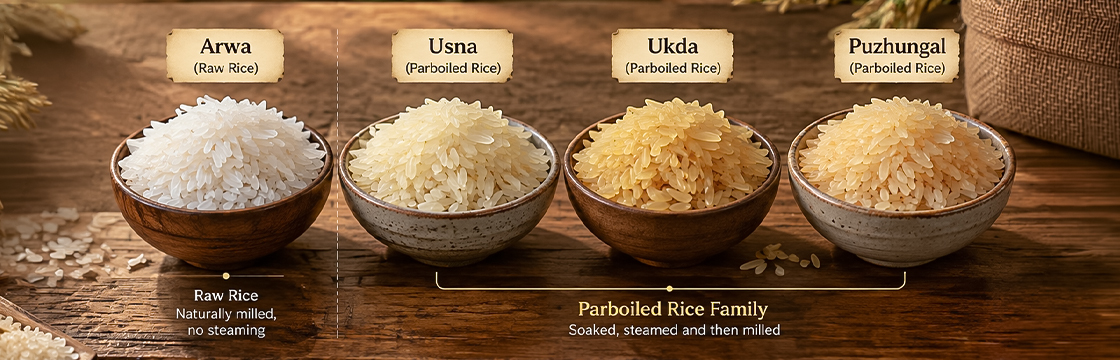
If a rice pack, a recipe or a relative has handed you one of these words, here is the short version: every one of them answers the same question. Was the paddy steamed before its husk came off, or not?
This guide maps the regional names, explains what parboiling does inside the grain, and shows how the same choice appears on a basmati pack as Raw, Steam and Sella. At India Gate Foods we sell both raw and parboiled basmati, so we have no reason to tell you one is better than the other. The dish decides.
Key Takeaways
- Parboiled rice is soaked, steamed and dried while still in its husk, then milled. Raw rice goes from dried paddy straight to the mill.
- Usna, Ukda and Puzhungal are regional names for parboiled rice. Arwa and Pachari mean raw rice.
- Parboiled grains are firmer, break less and take longer to cook. Raw rice cooks softer, with a cleaner aroma.
- The pale golden tinge of parboiled rice comes from the process itself, not from dye or age.
- On basmati packs, Sella means parboiled basmati. Steam basmati gets a lighter steaming, and raw basmati gets none.
What Is the Difference Between Raw Rice and Parboiled Rice?
Raw rice is paddy that is dried and milled with no heat treatment. Parboiled rice is paddy that is soaked, steamed and dried with the husk still on, and only then milled. The steaming sets the starch inside the grain, so parboiled rice cooks firmer, breaks less and stays separate, while raw rice cooks softer and smells cleaner.
Neither is a quality grade. Parboiling does not turn a poor grain into a good one, and well-grown raw rice is excellent at what it does. Raw rice covers an enormous range, from everyday sona masoori to premium aged basmati.
Two confusions are worth clearing early. Parboiled rice is not pre-cooked or instant rice: it still needs full cooking at home. It is not brown rice either. Brown rice keeps its bran layer, while most parboiled rice sold in India is milled white, with the bran removed like any other white rice.
Arwa, Usna, Ukda, Puzhungal, Pachari: Which Names Mean What?
Arwa and Pachari both mean raw rice. Usna, Ukda and Puzhungal all mean parboiled rice. They are the same two categories named in different languages: Arwa in Hindi, Pachari in Malayalam and Tamil homes, Usna in Bengali and eastern Hindi, Ukda in Marathi and Konkani, and Puzhungal in Tamil.
| Term | Language or region | Refers to | Also called |
| Arwa | Hindi; North and Central India | Raw rice | Arwa chawal, Arua chaula (Odia), Atop chal (Bengali) |
| Usna | Bengali, Odia, eastern Hindi belt | Parboiled rice | Usna chal, Usuna chaula (Odia), Siddha chal (Bengali) |
| Ukda | Marathi, Konkani | Parboiled rice | Ukda chawal, Ukde tandul |
| Puzhungal | Tamil | Parboiled rice | Puzhungal arisi, Pulungal arisi, "boiled rice" |
| Pachari | Malayalam, Tamil | Raw rice | Pachari, Pachai arisi, Pacharisi |
The pairs that send people to search: Usna and Ukda are the same thing, bought by different communities. Pachari and Arwa are the same thing too. And on South Indian shelves, "boiled rice" on a label means parboiled rice, not rice that has been cooked. Kerala's Matta rice, the reddish grain many households eat daily, is usually sold parboiled as well.
These names describe habit, not hierarchy. A Tamil household reaching for Puzhungal arisi and a Lucknow household reaching for Arwa chawal are each buying the rice their everyday dishes were built around. Our guide to rice varieties across India covers the grains themselves; this article is about what happened to them at the mill.
How Is Parboiled Rice Made?
Parboiled rice is made in three stages before milling: the paddy is soaked in water, steamed, and then dried, all with the husk on. The dried paddy is then milled like any other rice. That the work happens before milling is the detail most explanations skip, and it is why the changes reach the centre of the grain.
- Soak. Paddy is soaked until the grain inside the husk takes up water.
- Steam. The wet paddy is steamed or heated, which cooks the starch inside the grain.
- Dry. The paddy is dried back down so it can be stored and milled.
- Mill. The husk, and then the bran, are removed, just as they are for raw rice.
According to the International Rice Research Institute's Rice Knowledge Bank, three things change inside the grain along the way:
- The starch sets harder. It gelatinises during steaming and re-forms into a tightly packed structure as it cools and dries. The grain turns firmer and slightly glassy, which is why it resists breaking.
- Small cracks heal. Hairline cracks in the grain close up, so more grains come through the milling whole.
- Nutrients move inward. Micronutrients held in the bran migrate into the endosperm, the part of the grain that survives milling.
Soaking temperature, steaming time and drying speed vary from mill to mill, which is why two parboiled rice can look and cook quite differently. A light treatment gives a pale, cream-coloured grain. A longer or hotter one gives a deeper golden colour and a harder grain. None of this involves chemicals: parboiling is a traditional method that Indian households practised long before rice mills industrialised it.
Why Is Parboiled Rice Slightly Yellow?
The pale gold colour of parboiled rice comes from the process, not from dye, age or poor storage. During soaking and steaming, natural pigments from the husk and bran move into the grain, and the heat deepens the tone slightly. The colour lightens noticeably once the rice is cooked.
A deeper gold usually means a longer or hotter parboil. It tells you about firmness, not freshness. A dull grey cast, musty smell or patchy discoloration is a different matter in any rice, parboiled or raw, and worth a closer look before you buy.
How Do Raw and Parboiled Rice Cook Differently?
Parboiled rice takes longer to cook and needs somewhat more water than raw rice of the same variety. It cooks into firm, separate grains that tolerate overcooking and reheating well. Raw rice cooks faster and softer, releases more surface starch, and carries a cleaner, more pronounced aroma.
| Attribute | Raw rice | Parboiled rice |
| Cooking time | Shorter | Longer; soaking helps |
| Water needed | Less | Somewhat more; follow the pack |
| Cooked texture | Soft, tender, can be sticky | Firm, springy, separate |
| Breaking and clumping | More likely if overcooked or stirred hard | Less likely; grains hold shape |
| Leftovers and reheating | Can clump and turn pasty | Holds texture better |
The practical result: parboiled rice forgives. It handles a slightly wrong water ratio, a big vessel, a long wait on the stove and a reheat the next day. Raw rice rewards care with softer texture and better fragrance, and punishes carelessness faster. If raw rice keeps turning soft in your biryani, the usual culprits are the ratio, the soak or the par-boil rather than the rice type; our guide on why biryani rice turns mushy or sticky works through each one.
What Are Sella and Steam Basmati Rice?
Sella basmati is parboiled basmati. Golden Sella has a longer, hotter parboil and a golden tint; White Sella has a lighter one and stays cream-coloured. Steam basmati gets a mild steaming that firms
the grain without Sella's colour or hardness. Raw basmati, often sold simply as white or creamy basmati, has no heat treatment at all.
This is where the South Indian conversation and the basmati conversation meet. Sella (sometimes written Sela) is the basmati trade's name for what a Tamil kitchen calls Puzhungal: the same soak, steam and dry, applied to a long, aromatic grain. Naming for the lighter treatments varies between brands, and some sell a lightly steamed basmati as White Sella while others call it Steam, so the pack description matters more than the label word.
Why caterers lean on Sella: a 40 - person biryani means boiling rice in large handis, draining it in heavy batches, layering it and holding it hot for hours. Sella grains come through that without breaking or clumping. A home cook making dum biryani for six usually cares more about aroma and elongation, which raw aged basmati delivers best. Steam basmati sits between the two, firmer than raw and closer to it in look and fragrance than Sella.
That is why we label India Gate Golden Sella as parboiled basmati rather than relying on the trade word alone: the process tells you how the rice will behave in your pot.
One distinction keeps the shelf readable. Sella, Steam and raw describe processing, what happened before milling. Grades such as Dubar and Tibar describe grain length and breakage after milling. They are separate axes, so a pack can carry both. For the full range of basmati styles, see our guide to types of basmati rice.
Is Parboiled Rice Healthier Than Raw Rice?
Parboiling changes rice's nutritional profile in two documented ways. Nutrients held in the bran move into the grain before milling, so parboiled white rice retains more of them than raw white rice, according to the International Rice Research Institute. Controlled studies have also recorded a lower blood-glucose response to parboiled rice than to conventional white rice.
These are characteristics of the process, measured under specific study conditions, and results vary with the variety, how heavily it was parboiled, and how the rice is cooked and served. Not every nutrient moves the same way: research published on PubMed Central found that zinc levels in milled parboiled rice depended heavily on the processing method, and were sometimes lower than in raw milled rice.
None of this makes any rice a medical food. If you are choosing rice around a health condition, a doctor or registered dietitian is the right person to guide that decision.
Which Should You Buy?
Buy by the dish. Parboiled rice suits idli batter, big batches and anything that must hold its shape or keep well. Raw rice suits soft everyday rice, curd rice and dishes where aroma leads. Within basmati, choose Sella for bulk biryani, Steam for firm everyday pulao, and raw aged basmati for a fragrant home dum biryani.
- Daily rice and dal. Either works; follow what your household likes. Raw rice gives a softer plate. Parboiled gives separate grains and survives a lunchbox better.
- Idli and dosa batter. Parboiled idli rice for idli. For dosa, many cooks use raw rice or a raw and parboiled mix for crispness. Family recipes vary.
- Curd rice. Raw rice, cooked soft, mashes into the creamy texture curd rice needs. Parboiled grains stay too distinct.
- Large-batch biryani. Sella basmati. It is built for the handling of a functioning kitchen.
- Everyday pulao. Steam basmati or raw basmati. Both give separate grains; Steam gives a little more margin for error.
- Festive dum biryani at home. Raw aged basmati, for the fullest aroma and length.
In the India Gate Foods range, Golden Sella covers the bulk-cooking end and aged raw basmati such as India Gate Classic covers the aroma-first end. If you have settled on raw or parboiled and want to narrow down further, our guide to which basmati rice is best for cooking is the next step.
Once you know that every one of these words answers one question, whether the paddy was steamed before milling, you can read a rice pack in almost any Indian language. Pick the texture your dish needs and the label takes care of itself.
Frequently Asked Questions
Is Sella rice the same as parboiled rice?
Yes. Sella is the basmati trade name for parboiled basmati rice. The paddy is soaked, steamed and dried in its husk before milling, the same process South Indian kitchens know as Puzhungal. Golden Sella has a longer, hotter parboil than White Sella, which is why it is deeper in colour and firmer when cooked.
Is Ukda rice the same as Usna rice?
Yes. Both mean parboiled rice. Ukda is the word used in Marathi and Konkani homes, and Usna is used in Bengali, Odia and eastern Hindi-speaking homes. The rice itself is processed the same way; only the language on the pack or in the shop changes.
Which rice is used for idli and dosa batter?
Most households use parboiled rice, often sold as idli rice, for idli batter because it gives soft, well-risen idlis. For dosa, many cooks use raw rice or a mix of raw and parboiled for a crisper result. Proportions vary widely between family recipes.
Does parboiled rice take longer to cook than raw rice?
Yes. The starch inside a parboiled grain has already been set by steaming, so it absorbs water more slowly and needs a longer cook and somewhat more water than raw rice of the same variety. Soaking shortens the cooking time, and the pack instructions are the best guide for a specific rice.
Is parboiled rice good for daily use?
Yes. Parboiled rice is the everyday rice in many homes across Tamil Nadu, Kerala, Bengal and Odisha. It cooks into firm, separate grains and keeps well in a lunchbox. Households used to softer rice may prefer raw rice for daily meals; the choice is about texture and habit, not quality.
Can parboiled basmati be used for biryani?
Yes. Sella basmati is widely used for biryani, especially in large batches, because the grains hold their shape through boiling, draining, layering and long hot-holding. For a small home dum biryani where aroma matters most, many cooks prefer raw aged basmati, which is more fragrant and elongates more.