
Basmati vs Seeraga Samba for Biryani: Which Rice Actually Wins?

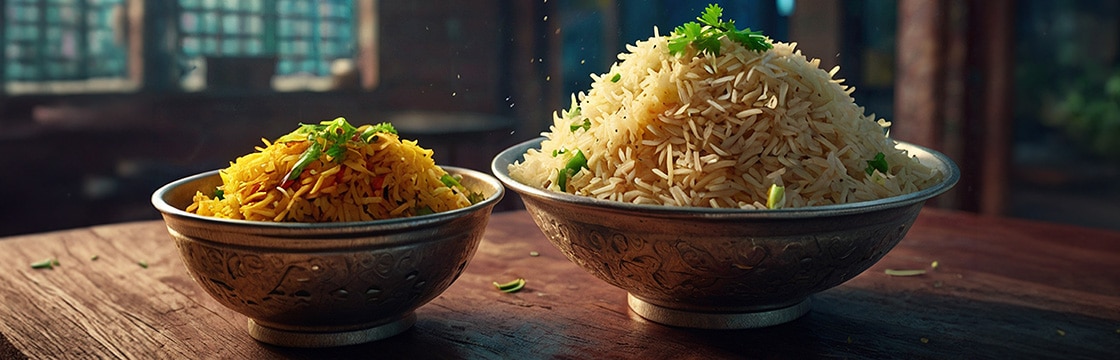
Ask ten biryani cooks which rice belongs in the pot and you’ll get ten different answers, each delivered with absolute conviction. A home cook from Lucknow will reach for aged basmati without a second thought. A pit cook from Ambur or Dindigul will look at you like you’ve committed a culinary crime if you even suggest switching from Seeraga Samba.
Both are right. But only for their own style of biryani.
The choice between basmati and Seeraga Samba isn’t really a debate, it’s a geography lesson. This guide breaks down exactly what each rice does inside the pot, which biryani traditions they belong to, how they compare on nutrition, and when India Gate Foods’ India Gate Basmati Rice is the right call for your recipe.
Key Takeaways
- Basmati produces long, fluffy, fragrant grains, the correct choice for Hyderabadi dum biryani, Lucknowi biryani, and Kolkata biryani.
- Seeraga Samba’s compact grain absorbs spices far more deeply, the authentic rice for Ambur, Dindigul, and Chettinad biryanis.
- India Gate Foods offers premium aged basmati, India Gate Classic and India Gate Feast Rozzana, specifically recommended for dum-style and North Indian biryanis.
- The right rice depends entirely on your biryani tradition. Neither is universally superior.
If you are confused what rice to choose for biryani, then you should read India Gate Foods Complete Guide to Biryani Rice: Which Type and Variety to Choose
What Is the Real Difference Between Basmati and Seeraga Samba Rice?
The most important thing to understand upfront: these two rices don’t just look different, they represent fundamentally different cooking philosophies.
Basmati Rice: The Long-Grain Northern Classic
Basmati is a long-grain aromatic rice cultivated in the Himalayan foothills of northern India and Pakistan. The name means ‘fragrant’ in Hindi. Its grains are slim and elongated, designed to grow even longer during cooking, sometimes nearly doubling in length. The result is a light, fluffy texture where each grain stays distinct and separate.
Basmati’s lower surface starch is what gives it that non-sticky character. It doesn’t clump, it doesn’t absorb cooking liquid aggressively, it stays light, which is exactly what layered dum cooking requires.
India Gate Foods, one of India’s leading basmati brands since 1993, ages its basmati for a minimum period to further reduce moisture content, which results in even longer cooked grains that separate cleanly in the pot. This is why India Gate Classic Basmati and India Gate Feast Rozzana are consistently recommended for biryani by home cooks and professional chefs alike.
Seeraga Samba: Tamil Nadu’s Biryani-Born Rice
Seeraga Samba is a short-grain aromatic rice grown exclusively in Tamil Nadu, primarily in the Cauvery delta districts of Thanjavur and Nagapattinam. Its name comes from ‘Seeragam,’ the Tamil word for cumin, because the tiny oval grains look remarkably like cumin seeds. It’s harvested in the Samba season, August to January.
References to Seeraga Samba appear in ancient Tamil documents including the Palani copper inscriptions, and the composer Sri Thiyagaraja wrote that among all rice varieties, none compares to Seeraga Samba. It received Geographical Indication status as a Tamil Nadu-origin rice, cementing its regional provenance and authenticity.
Where basmati stays separate, Seeraga Samba absorbs, every grain soaks up spiced broth, meat juices, caramelised onion, and ghee from every surface. When you eat a Tamil Nadu biryani made with Seeraga Samba, you’re not tasting separate components. You’re tasting everything at once, unified in each grain.
How Does Each Rice Actually Behave Inside the Biryani Pot?
Understanding the cooking science is what separates average biryani from great biryani. The two rices behave completely differently under heat, and once you know why, every technique decision becomes clearer.
Basmati: Soaking, Steaming, and Staying Separate
Basmati needs 20–30 minutes of soaking before cooking. This hydrates the elongated starch cells evenly so they cook without breaking. When basmati hits hot water or steam, it elongates further, fluffs up, and the grains stay visually distinct, you can see each one. This is exactly what makes it work in dum biryani, where layers of rice and masala need to remain separate enough to be visible when you open the sealed pot.
The aroma of aged basmati, that delicate, nutty fragrance, blooms fully during cooking. India Gate Classic Basmati in particular is known for its consistent grain length and fragrance, which is why it’s the default choice in Hyderabadi and Lucknowi biryani restaurants.
Seeraga Samba: Absorbing, Deepening, and Binding Flavour
Seeraga Samba only needs 15–20 minutes of soaking. Its compact grain has a higher surface area relative to its size, which means it absorbs liquid, and every flavour dissolved in that liquid rapidly and completely. This is the structural reason why Dindigul and Ambur biryanis taste the way they do: every grain carries the full masala profile, not just the surface coating.
The cooking window for Seeraga Samba is narrow. It moves from perfectly cooked to overcooked quickly, which is why professional biryani cooks are precise about timing. Slightly undercook it, it will finish in the resting phase.
Which Biryani Styles Use Basmati and Which Use Seeraga Samba?
This is the geography lesson. The rice you use isn’t a preference, it’s a marker of culinary tradition.
North Indian and Mughal-Tradition Biryanis: Basmati
- Hyderabadi Dum Biryani: The most internationally recognised biryani. Layered dum cooking, aged long-grain basmati, saffron. India Gate Classic Basmati is widely used in home kitchens for this preparation.
- Lucknowi (Awadhi) Biryani: Lightly spiced, refined, the pakki style. Basmati’s delicate fragrance is the whole point. India Gate Feast Rozzana works well here.
- Kolkata Biryani: Famous for potatoes alongside the meat. Uses basmati, a legacy of the Nawabs of Awadh.
- Mughlai-style Biryanis: Any biryani in the broad North Indian Mughal tradition uses aged long-grain basmati
South Indian Tamil-Tradition Biryanis: Seeraga Samba
South Indian biryanis from Tamil Nadu use Seeraga Samba rice, which imparts a distinctly different texture and depth compared to the long-grain basmati preferred in North India. These are not interchangeable, the rice is structural to the dish’s identity.
- Ambur Biryani: Originated in Vellore district. Mild, balanced, less oily, cooked with curd-marinated meat. Ambur Star Biryani, operating since 1890, has never deviated from Seeraga Samba.
- Dindigul Biryani: The Thalappakatti style. Tangy from curd and lemon, peppery, spice-forward. The idea is to taste the Seeraga Samba first before the meat — the rice is the hero, not a backdrop.
- Chettinad Biryani: Intensely spiced, Seeraga Samba is the only rice that holds up to Chettinad’s bold spice profile.
- Kongu-style Biryani: Coconut milk, minimal oil, Seeraga Samba. Clean and aromatic.
Want to know what are the 7 regional biryani styles you can read India Gate Foods guide.
Biryani Style × Rice × India Gate Recommendation
| Biryani Style | Rice Type | Recommended Brand |
|
Hyderabadi Dum |
Basmati |
India Gate Classic Basmati |
|
Lucknowi / Awadhi |
Basmati |
India Gate Feast Rozzana |
|
Ambur Biryani |
Seeraga Samba |
Seeraga Samba (regional) |
|
Dindigul Biryani |
Seeraga Samba |
Seeraga Samba (regional) |
|
Chettinad Biryani |
Seeraga Samba |
Seeraga Samba (regional) |
|
Kolkata Biryani |
Basmati |
India Gate Mogra Basmati |
Basmati vs Seeraga Samba: Which Tastes Better in Biryani?
The honest answer is: it depends entirely on what ‘better’ means to you and which biryani you’re cooking. But the comparison is clearer than most people think.
If you want:
- Visual presentation, distinct, elongated grains standing separate = Basmati
- Subtle, nutty fragrance that complements without competing = Basmati
- Light, fluffy mouthfeel where rice and masala stay distinct = Basmati
- Every grain to taste like the full masala profile = Seeraga Samba
- Intense, earthy, concentrated biryani flavour in each bite = Seeraga Samba
- A heartier, denser texture with al dente resistance = Seeraga Samba
The cleanest way to put it: Basmati gives you a biryani where rice and masala are partners. Seeraga Samba gives you a biryani where the rice has become the masala. Neither is wrong, they’re different philosophies of the same dish.
For North Indian biryanis at home, India Gate Classic Basmati gives you the consistent grain length and aged fragrance that produces restaurant-quality results. The rice elongates cleanly, absorbs just enough flavour from the dum steam, and presents beautifully when you open the pot.
How Do Basmati and Seeraga Samba Compare on Nutrition and Health?
Both are aromatic white rice varieties with broadly similar macronutrient profiles. The differences are real but modest, here’s what actually matters.
Basmati’s GI ranges from approximately 50 to 58 depending on the variety and aging. Aged basmati, like India Gate Classic Basmati, tends to score on the lower end of this range because longer aging reduces moisture and changes the starch structure, slightly slowing digestion. Both prices fall in the medium-to-low GI range and are comparable for regular consumption.
If you are wondering about what type of rice long grain vs short grain rice is good for briyani then you should read India Gate Foods Guide.
Can You Substitute Basmati for Seeraga Samba or Vice Versa?
Technically yes. Culinarily, it’s complicated, and you need to know what you’re trading away.
Using Seeraga Samba in a Hyderabadi dum biryani: You’ll lose the visual layering effect and the lightness that defines the dish. The shorter grains will absorb the cooking liquid more aggressively than intended. The result won’t be a bad dish, but it won’t be a Hyderabadi biryani. The aesthetics and the texture philosophy of dum biryani depend on basmati.
Using basmati in an Ambur or Dindigul biryani: You’ll get a pleasant, fragrant result. But the masala won’t penetrate the grains the way it should, flavour stays on the surface rather than inside each grain. The characteristic intensity of Tamil Nadu biryani disappears.
The best middle-ground option when Seeraga Samba isn’t available? Kaima rice (also called Jeerakasala) from Kerala, shorter than basmati but longer than Seeraga Samba. It’s a workable compromise. For basmati needs, India Gate Mogra Basmati, a medium-grain variety, can work as a softer-textured alternative in biryanis where a full-length aged grain isn’t needed.
Which Rice Should You Choose? A Practical Decision Guide
Run your biryani through these four questions:
- What tradition are you cooking from?
- North Indian, Hyderabadi, Lucknowi, Kolkata = Use basmati. India Gate Classic Basmati or India Gate Feast Rozzana are the recommended choices.
- Tamil Nadu, Ambur, Dindigul, Chettinad, Kongu = Use Seeraga Samba. It’s not optional.
- What cooking method are you using?
- Sealed dum cooking with layered steam = Basmati. The steam circulates between separate grains.
- Open-pot or direct spice-cooking = Seeraga Samba. Absorption is the point.
- What texture do you want in the finished dish?
- Light, fluffy, visually distinct grains = Basmati
- Dense, spice-saturated, earthy bite in every grain = Seeraga Samba
- What’s the occasion?
- Wedding, celebration, or large function where presentation matters = Basmati (India Gate Classic)
- Authentic regional South Indian experience at home = Seeraga Samba
FAQ
Is Seeraga Samba better than Basmati for biryani?
Seeraga Samba is the better choice for South Indian biryanis like Ambur and Dindigul, where deep spice absorption is the goal. Basmati, particularly aged varieties like India Gate Classic Basmati, is the correct choice for Hyderabadi and Lucknowi biryanis, where fluffy, separate grains and fragrant layering define the dish. Neither is universally better, the biryani tradition determines the answer.
What is the best basmati rice for biryani in India?
India Gate Classic Basmati is widely recommended for biryani in India for its consistent extra-long grain length, aged fragrance, and reliable separation in dum cooking. India Gate Feast Rozzana is a popular choice for Lucknowi and everyday dum-style biryanis. Both are available nationally online and in stores.
Why does Seeraga Samba taste more flavourful than basmati in biryani?
Seeraga Samba’s compact short grain has higher surface area relative to size, enabling it to absorb spiced cooking liquid far more deeply than long-grain basmati. The result is that every grain carries the full masala flavour profile rather than just a surface coating. Basmati’s strength is fragrance and visual presentation, not spice absorption.
Can I use India Gate Basmati for South Indian biryani?
You can, but you won’t produce an authentic result. South Indian biryanis like Ambur and Dindigul are architecturally built around Seeraga Samba’s spice absorption. India Gate Basmati’s grain stays separate and fragrant, ideal for North Indian dum biryani, but won’t deliver the dense, spice-saturated character that defines Tamil Nadu biryani.
Category: Blogs