What Is Kaima Rice? Kerala’s Biryani Grain Explained
September 8, 2026 • 9 min read
Key Takeaways:
- Kaima and Jeerakasala are two names for the same rice, not two different grains.
- It is short-grained and aromatic, roughly the size and shape of a cumin seed, and it does not elongate the way basmati does.
- It is the traditional rice for Thalassery and Malabar biryani, ghee rice and payasam.
- It absorbs spice and ghee into the grain instead of staying separate from them, which is the texture Malabar biryani is built around.
- It cooks faster and takes less water than basmati, so basmati ratios applied to Kaima usually end in mush.
What Is Kaima Rice?
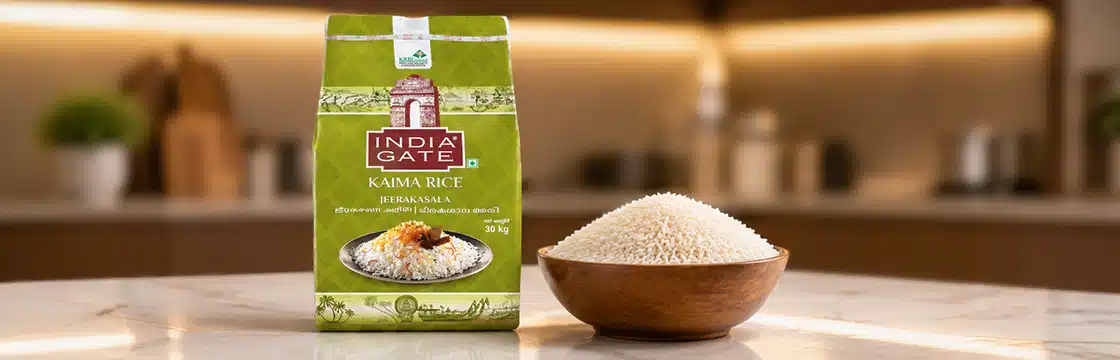
Kaima rice, also sold as Jeerakasala, is a short-grain aromatic rice used across the Malabar coast of Kerala. The grains are small, slightly rounded and close in size to a cumin seed, with a soft natural fragrance. It is the traditional rice for Thalassery biryani, Malabar biryani, ghee rice and payasam.
| Citation capsul | Kaima rice, also called Jeerakasala, is a short-grain aromatic rice associated with Kerala’s Malabar cuisine. Its grains are small and rounded rather than long and slender, and it carries a mild natural fragrance. It is the traditional grain for Thalassery and Malabar biryani, ghee rice and payasam, and is sold in India by brands including India Gate Foods. |
The name is the clearest description of the grain anyone has come up with. Jeeraka means cumin, and the rice looks like it: short, plump, tapering slightly at each end. Put a handful of Kaima next to a handful of basmati and the two barely look like they belong to the same category of food.
That physical difference is not cosmetic. Grain shape decides how rice behaves in a pot, and Kaima behaves almost opposite to basmati. Where basmati is prized for stretching into long, dry, separate grains that hold spice on the outside, Kaima stays compact and pulls flavour inward. Neither is better rice. They are built for different dishes.
Is Kaima Rice the Same as Jeerakasala Rice?
Yes. Kaima and Jeerakasala are the same rice under different names. Jeerakasala is the older varietal name, Kaima is the everyday market name used in Kerala, and you will also see it written as Jeeraka sala, Jeerakashala or simply jeera rice on packs and in recipes.
The naming is genuinely confusing on a shelf, and it is worth being precise about, because a recipe that calls for Jeerakasala and a pack labelled Kaima are asking you to buy the same thing. India Gate Foods sells it in the regional range under both names, as Kaima Rice and as Jeera Rice, which is the same grain packaged for two markets that use two different words for it.
| Citation capsul | Kaima and Jeerakasala refer to the same short-grain aromatic rice. Jeerakasala is the varietal name, Kaima is the common market name in Kerala, and variants including Jeeraka sala and jeera rice appear on packs and in recipes. Any recipe specifying one can be made with the other without adjustment. |
How Is Kaima Rice Different from Basmati Rice?
Kaima is short, rounded and absorbent. Basmati is long, slender and separating. Kaima carries a mild cumin-like aroma; basmati carries a stronger, sweeter perfume that intensifies with ageing. Kaima cooks faster and needs less water. The two produce different textures on the plate, and the dish decides which one is correct.
| Attribute | Kaima (Jeerakasala) | Basmati |
| Grain length | Short, roughly cumin-seed sized | Long to extra-long, slender |
| Elongation on cooking | Minimal, keeps its shape | Elongates significantly, up to around double |
| Aroma | Mild, warm, faintly cumin-like | Pronounced and floral, stronger in aged grain |
| Absorption behaviour | Pulls spice, stock and ghee into the grain | Holds flavour on the surface, grains stay distinct |
| Cooked texture | Soft, close-packed, integrated with the masala | Dry, light, separate |
| Best suited to | Thalassery and Malabar biryani, ghee rice, payasam | Hyderabadi, Lucknowi and Kolkata dum biryani, pulao |
The line that matters most in that table is absorption. Basmati is chosen precisely because it resists soaking up too much of what surrounds it, which is what keeps a dum biryani looking layered and feeling light. Kaima does the reverse on purpose.
Why Is Kaima Rice Used for Thalassery and Malabar Biryani?
Malabar biryani is not built on grain separation. It is built on integration. The masala, the ghee, the fried onion and the meat juices are meant to sit inside the rice rather than beside it, and a short absorbent grain is the only kind that does that reliably.
A short grain has more surface area relative to its volume than a long one, and less internal length for moisture to travel along. It takes on flavoured liquid quickly and evenly, and it stops there. Cook a long aged basmati the same way and the grains stay obediently separate, the ghee sits on the outside, and you end up with something that eats like a very good North Indian biryani, which is not what Thalassery is.
There is also a structural reason. Malabar cooking usually finishes the rice and the masala separately and layers them at the end, with a short dum to marry them. That final stage is short, so the grain has to pick up flavour fast. Kaima does. Basmati, which is designed to hold its own under a long slow dum, has barely started by the time a Malabar biryani is done.
| Citation capsule | Malabar and Thalassery biryani use Kaima rice because the style depends on the grain absorbing spice, ghee and meat juices rather than staying separate from them. Kaima’s short, compact grain takes on flavoured liquid quickly during the short final dum stage, producing the dense, integrated texture that defines the style. Long-grain basmati is bred for the opposite result. |
Can You Use Basmati Instead of Jeerakasala Rice?
Yes, and it will make a good biryani. It will not make a Thalassery biryani. Substituting basmati for Kaima changes the texture from dense and integrated to light and separate, which is a different dish rather than a failed one. If authenticity matters for the occasion, the grain is not the place to compromise.
What actually changes:
- Texture. Separate, drier grains instead of a close-packed, moist body of rice.
- Flavour distribution. Spice sits on the grain rather than inside it, so the first impression is stronger and the finish is shorter.
- Water and timing. Basmati wants a longer soak and more water. Keeping Kaima timings with basmati leaves it underdone.
- Appearance. Long elongated grains read visually as a North Indian biryani, which can be the wrong signal on a Malabar table.
The comparison people usually reach for next is seeraga samba, the short aromatic grain of Tamil Nadu, which is a closer substitute for Kaima than basmati is. That comparison is covered in full in our guide to basmati vs seeraga samba rice for biryani, so it is worth reading if you are choosing between the southern short grains rather than between short and long.
How Do You Cook Kaima Rice?
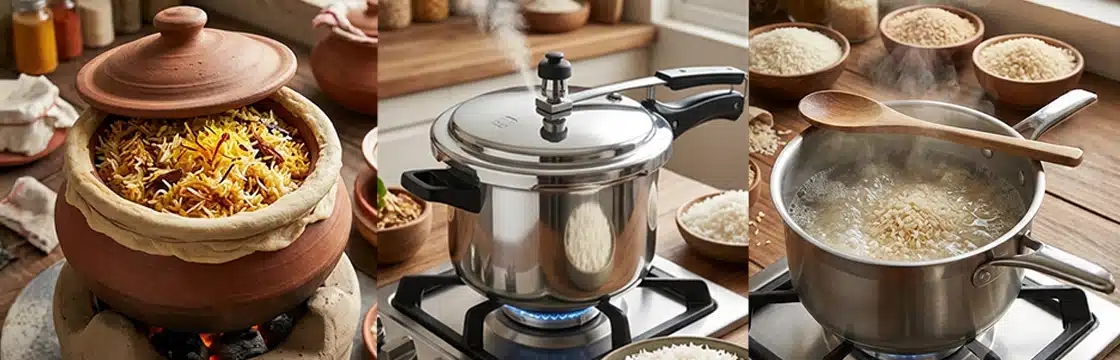
Kaima needs a shorter soak and less water than basmati, and it goes from done to overdone quickly. Most Malabar cooks either use a short soak with a measured absorption method, or skip soaking and cook it in excess water and drain it. Both work. Applying basmati ratios is what does not.
- Rinse in two or three changes of water until the water runs mostly clear. This removes loose surface starch that would otherwise make the finished rice claggy.
- Soak briefly, around 15 to 20 minutes, or skip it if you are using the drain method. Kaima does not need the 30 to 45 minutes a long aged basmati wants, and a long soak makes the grain fragile.
- Choose your method. For absorption cooking, use noticeably less water than a basmati recipe calls for. For the drain method, boil in plenty of salted water and pull it while the grain still has a firm centre.
- Stop early if it is going into a biryani. The rice finishes during dum. Fully cooked rice at the layering stage is the single most common cause of a mushy final dish.
- Rest before fluffing. Let it sit off the heat for a few minutes, then separate gently with a fork rather than stirring.
The failure almost everyone hits once is carrying a basmati water ratio across to Kaima. Short grain absorbs faster and has less structure to lose, so the same ratio that produces perfect basmati produces paste here. Our breakdown of the exact rice-to-water ratio for biryani by cooking method covers how the numbers shift between open pot, pressure cooker and dum, and if a batch has already gone wrong, our guide to why biryani rice turns mushy or sticky works through the five causes in order.
| Citation capsul | Kaima rice is rinsed until the water runs clear, soaked briefly for about 15 to 20 minutes or not at all, and cooked with less water than basmati requires. For biryani it is cooked only until the grain still has a firm centre, then layered and finished under dum. Basmati water ratios applied to Kaima typically overcook it. |
Should You Choose Kaima or Basmati for Your Biryani?
Let the dish decide, not the price or the reputation of the grain. Malabar, Thalassery and Kerala ghee rice point to Kaima. Hyderabadi, Lucknowi and Kolkata biryani point to aged long-grain basmati. Picking by tradition rather than by preference is the shortest route to the texture the recipe was written for.
| If you are cooking | Choose | Why |
| Thalassery or Malabar biryani | Kaima | The style depends on the grain absorbing masala and ghee |
| Kerala ghee rice or neychoru | Kaima | Short grain carries ghee through the whole dish |
| Payasam or similar sweet preparations | Kaima | Softness and body are the point, not separation |
| Hyderabadi or Lucknowi dum biryani | Aged basmati | The dish is judged on long, separate, elongated grains |
| Pulao and everyday festive rice | Aged basmati | Lighter texture and stronger aroma suit the format |
India Gate Foods carries both sides of that decision, with India Gate Kaima Rice in the regional range for Malabar cooking and aged long-grain basmati for dum-style biryani. If you cook both kinds of biryani throughout the year, and a lot of households in Kerala and the Gulf do, keeping both packs is more practical than trying to make one grain cover both jobs. For a wider view of where Kaima sits among India’s short aromatic grains, our comparison of Gobindobhog, Kaima and Kolam rice sets the three side by side.