Gobindobhog vs Kaima vs Kolam Rice: What’s the Difference and Which One Should You Use?
September 8, 2026 • 8 min read
Three short-grain rice, three completely different jobs in the kitchen. Gobindobhog is Bengal’s sweet, sticky aromatic grain built for desserts and bhog. Kaima (also called Jeerakasala) is Kerala’s cumin-shaped grain that defines Malabar and Thalassery biryani. Kolam, sold as Wada Kolam or Surti Kolam, is the soft, non-sticky everyday grain of Maharashtra and Gujarat that many families use as a basmati substitute. Pick the wrong one and your payesh turns watery, your biryani clumps, or your daily dal-chawal feels heavy. At India Gate, all three are part of our regional rice range, so this guide is written from grain we actually mill, sort and pack.
Key Takeaways:
- Gobindobhog is a GI-tagged (2017), sticky, sweet-buttery Bengal rice, best for kheer, payesh and Bengali sweets, not biryani.
- Kaima (Jeerakasala) is a Kerala biryani grain and it is NOT the same as Seeraga Samba, which is from Tamil Nadu.
- Kolam (Wada / Surti / lachkari) is the everyday all-rounder: soft, non-sticky, mild aroma, and the most practical basmati alternative for daily meals.
- Quick rule: sweets = Gobindobhog, South-Indian biryani/ghee rice = Kaima, daily dal-chawal/khichdi = Kolam.
Here’s the fast answer before we get into detail. These three grains differ most in stickiness, aroma and what they’re traditionally cooked into, region tells you origin, but texture tells you what to make.
| Feature | Gobindobhog | Kaima (Jeerakasala) | Kolam (Wada/Surti) |
| Region | West Bengal (Purba Bardhaman) | Kerala (Wayanad/Malabar) | Maharashtra & Gujarat |
| Grain | Short, white | Short, cumin-shaped | Short-to-medium |
| Texture | Soft & sticky | Fluffy, grains stay intact | Soft, non-sticky |
| Aroma | Sweet, buttery | Strong, cumin-like | Mild, floral |
| Best for | Payesh, kheer, sweets, bhog | Malabar biryani, ghee rice | Daily meals, khichdi, pulao |
| GI status | GI-tagged (2017) | Regional landrace | Regional landrace |
What is Gobindobhog rice, and what is it best used for?
Gobindobhog is a short-grain, white, aromatic non-basmati rice from West Bengal, prized for a sweet, buttery flavour and a soft, sticky cooked texture. It earned a Geographical Indication (GI) tag in 2017, and it’s traditionally cultivated in Purba Bardhaman, the belt long known as the “rice bowl of Bengal.” Its name comes from its use in bhog (offerings) to Govindajiu, the family deity of the Setts of Kolkata. Best uses: payesh (rice kheer), Bengali sweets like sitabhog and mihidana, khichuri, and festive or temple cooking, not layered biryani.
Why does it suit sweets so well? It’s a stickier grain with relatively low-intermediate amylose and roughly amount of protein, so it softens and binds rather than staying separate exactly what kheer and sitabhog need (India Brand Equity Foundation). That same stickiness is why it’s a poor pick for biryani, where you want distinct, separate grains. For long-grain dum biryani, our complete guide to biryani rice explains why aged basmati is the standard.
In Short: Gobindobhog is a GI-tagged (2017) short-grain aromatic rice from Purba Bardhaman, West Bengal, with a sweet, buttery flavour and sticky texture. With low-intermediate amylose (~17.9%), it is the traditional rice for Bengali payesh, kheer, and sweets such as sitabhog and mihidana, rather than for biryani.
India Gate offers Gobindobhog within its regional rice range, raw, aged and milled for its signature fragrance, so home cooks get authentic Bengal aroma without sourcing loose, unbranded grain. If you only know basmati so far, our explainer on long-grain vs short-grain rice shows why short, high-starch grains behave the way they do.
What is Kaima rice (Jeerakasala), and how is it different from Seeraga Samba?
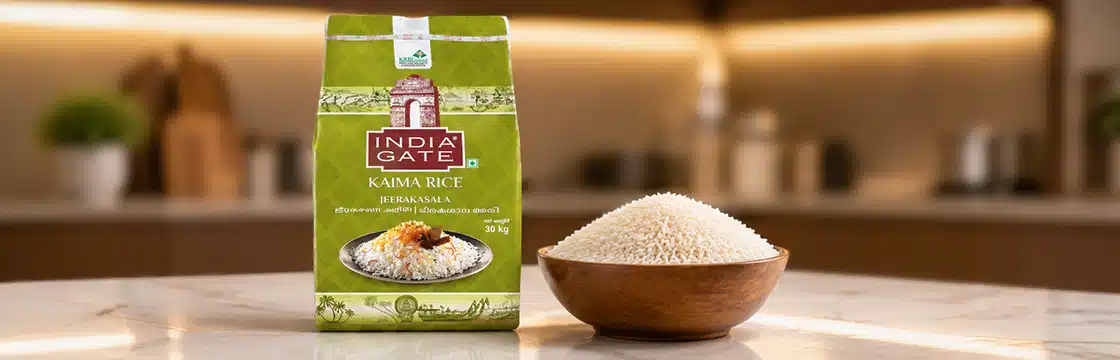
Kaima known as Jeerakasala in Kerala is a short-grain aromatic rice from the Malabar region, especially Wayanad, with tiny grains that resemble cumin seeds and a strong, distinctive aroma. When cooked, the grains stay structurally intact and absorb spice beautifully, which is why Kaima is the authentic base for Thalassery and Malabar biryani, ghee rice (neychoru) and payasam. Here’s the correction most sources get wrong: Kaima is not the same as Seeraga Samba.
Kaima (Jeerakasala) is a Kerala grain used in Malabar/Thalassery biryani. Seeraga Samba is a Tamil Nadu grain grown in the Cauvery delta, used in Ambur and Dindigul biryani. They look similar and both mean “cumin rice,” but they are different varieties from different states.
If your recipe is a Tamil-style biryani, you want Seeraga Samba, and our Basmati vs Seeraga Samba guide breaks that down. If it’s a Kerala-style biryani or ghee rice, Kaima is the correct grain. Want the wider map of which grain belongs to which biryani? See our regional biryani styles guide.
India Gate has this grain as India Gate Kaima Rice and as India Gate Jeera Rice, a short-grain aromatic variety nurtured in the air and soil of Bardhaman. It’s the easy way to cook authentic Malabar dishes at home without hunting for loose regional rice.
What is Kolam rice (Wada Kolam and Surti Kolam), and is it good for daily meals?
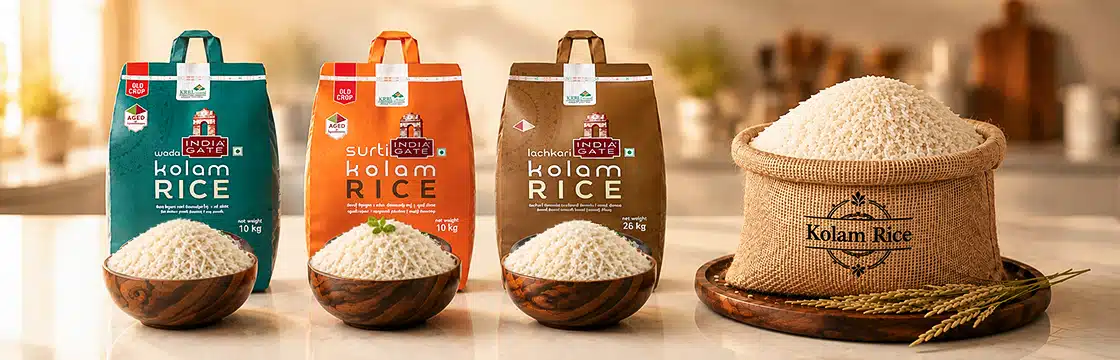
Kolam is a soft, non-sticky, short-to-medium grain rice from western India, valued as an easy everyday rice and one of the most practical basmati substitutes for regular meals. It cooks light and fluffy with a mild, gentle aroma, sits easy on the stomach, and tends to carry a lower glycaemic load than many polished white rices. You’ll mostly see two types: Wada Kolam from the Wada/Palghar belt of Maharashtra (premium, more fragrant), and Surti Kolam from Gujarat (a value, everyday staple). Yes, it’s excellent daily rice.
Wada Kolam vs Surti Kolam: which one?
Both are soft everyday grains; the difference is region, fragrance and price. Choose Wada Kolam when you want a slightly more aromatic, premium daily grain, it’s lovely for plain steamed rice, khichdi and light pulao. Choose Surti Kolam when you want a dependable, economical staple for high-volume daily cooking. Neither is built for long-grain dum biryani; their strength is comfort food, not show-piece grains.
Kolam rice is a soft, non-sticky short-to-medium grain from Maharashtra (Wada Kolam) and Gujarat (Surti Kolam). With a mild aroma and easy digestibility, it is one of the most practical everyday basmati substitutes, ideal for dal-chawal, khichdi, curd rice and simple pulao rather than biryani.
India Gate carries both, India Gate Wada Kolam Rice, described as soft-textured with a distinct floral aroma when cooked, plus Surti Kolam in the same regional range. For families that want basmati for occasions and a lighter grain for daily meals, Kolam is the sensible second pack in the kitchen.
Gobindobhog vs Kaima vs Kolam: how do they really compare?
The cleanest way to choose is by texture and aroma, because that’s what decides the dish. Gobindobhog binds and sweetens, Kaima stays separate and spice-hungry, and Kolam stays soft and neutral. Think of it as dessert grain, biryani grain, and everyday grain.
| Factor | Gobindobhog | Kaima | Kolam |
| Stickiness | High (binds) | Low (separate) | Low–medium (soft) |
| Aroma strength | Sweet, strong | Strong, cumin-like | Mild, neutral |
| Cooked feel | Soft, clingy | Firm, intact | Light, fluffy |
| Signature dish | Payesh / kheer | Malabar biryani | Dal-chawal / khichdi |
| Biryani-ready? | No | Yes (South-style) | No |
| Everyday use | Occasional | Occasional | Daily |
Across Gobindobhog, Kaima and Kolam, texture is the deciding factor: Gobindobhog is sticky and sweet for desserts, Kaima stays separate and spice-absorbing for South-Indian biryani, and Kolam is soft and neutral for everyday meals. None of the three is a substitute for aged long-grain basmati in North-Indian dum biryani.
How do you cook Gobindobhog, Kaima and Kolam rice (water ratio and time)?
All three are short grains, so they need less water and less time than long-grain basmati, and a short soak helps every one of them. Use these as reliable starting points, then adjust for crop age and your pot, older rice drinks a little more water. Rinse until the water runs clear before you start.
| Variety | Soak | Water (rice:water) | Simmer time | Note |
| Gobindobhog | 15–20 min | 1 : 1.75 | 10–12 min | For payesh, cook in milk, not water |
| Kaima | 10–15 min | 1 : 2 | 12–15 min | Sauté in ghee first for neychoru |
| Kolam | 15–20 min | 1 : 2 | 12–15 min | Doubles in size; great absorption |
One habit that helps all three: don’t over-stir. Short grains release starch quickly, and stirring turns soft into gluey. For Gobindobhog kheer, that starch is your friend; for Kolam dal-chawal, let it sit covered off the heat for five minutes so the grains finish gently.
Which rice should you choose for your dish?
Match the grain to the outcome you want, not just the region it’s from. Here’s the decision in plain terms, by what you’re actually cooking.
- Bengali sweets, payesh, kheer, sitabhog, bhog and festive cooking: choose Gobindobhog. Its sweet, sticky grain is the whole point.
- Malabar / Thalassery biryani, Kerala ghee rice, payasam: choose Kaima (Jeerakasala). For Tamil-style Ambur or Dindigul biryani, switch to Seeraga Samba instead.
- Everyday dal-chawal, khichdi, curd rice, lemon rice, simple pulao: choose Kolam (Wada or Surti). It’s the light, daily workhorse.
- North-Indian / Hyderabadi / Lucknowi dum biryani and special-occasion pulao: none of these three, use aged long-grain basmati from the India Gate range.
What if you can’t find the exact grain?
Substitutions work if you respect texture. No Kolam? Any soft, short-grain everyday rice (or a value white basmati) covers daily meals. No Gobindobhog for kheer? Another sticky short grain works, though you’ll lose the buttery aroma. No Kaima? A short-grain aromatic rice is closer than basmati, never reaching for long-grain to fake a Malabar biryani.
If you keep one premium grain and one everyday grain in the kitchen, you’re covered for almost everything. Explore Gobindobhog, Kaima and both Kolam types in the India Gate regional rice range, all milled and packed to the same quality standard as our basmati.
Final Words
Gobindobhog, Kaima and Kolam aren’t interchangeable, they’re three specialists. Reach for Gobindobhog when you’re making something sweet, Kaima when you’re building a South-Indian biryani or ghee rice, and Kolam when you just want a clean, comforting everyday plate. Keep aged basmati for the show-piece dishes, and you’ve got the whole spectrum covered. All four live in the India Gate rice range, milled, sorted and packed to one standard, so the only decision left is what you’re cooking tonight.