
The Exact Rice-to-Water Ratio for Biryani: Open Pot vs Pressure Cooker vs Dum

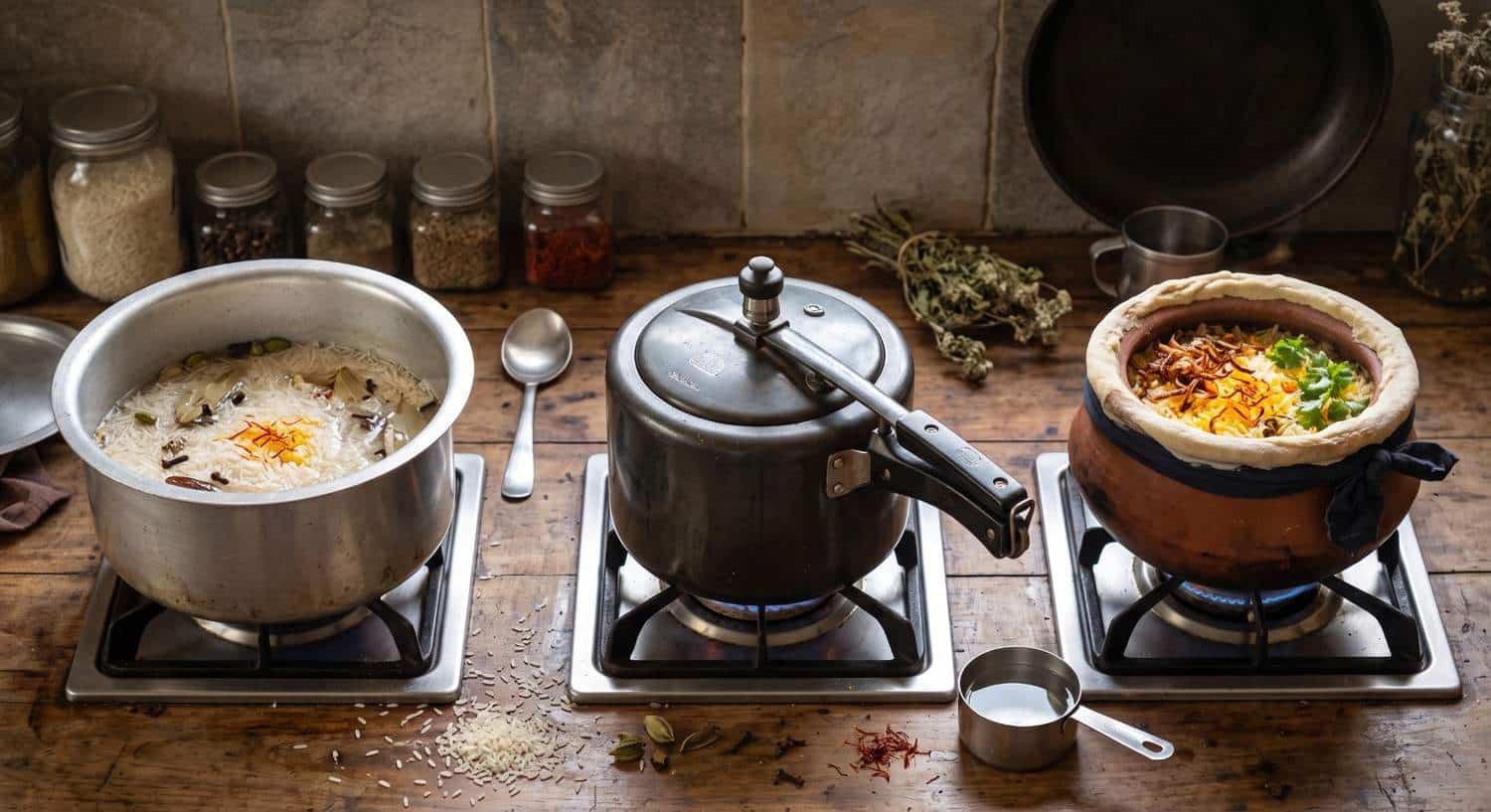
The exact rice to water ratio for biryani depends on which cooking method you are using, not on one fixed number that works everywhere. Open pot biryani rice needs a large excess of water since it is drained partway through cooking, pressure cooker biryani rice holds steady at roughly 1:1.5, and dum biryani rice follows the same par-boil-and-drain logic as the open pot method before it goes in for the final steam. At India Gate Foods, this is one of the questions our team hears most often from home cooks who picked up a ratio from a random video and ended up with rice that was either soggy or half raw.
|
Key Takeaways
|
What Is the Basic Rice-to-Water Ratio for Biryani?
The baseline ratios for biryani rice are 1:2 for a stovetop pressure cooker, roughly 1:1.25 for an electric pressure cooker, and a large excess of water (later drained) for both the open pot and dum par-boil stages. These four numbers cover almost every home setup, and everything past this section is about adjusting them for your specific rice and method.
| Method | White Sella | Soak Time | Notes |
| Open Pot (par-boil) | Large excess, drained | 20 to 30 min | Not a fixed ratio. Water is discarded once rice hits 70 to 80% cook. |
| Pressure Cooker (stovetop) | 1 : 2 | 20 to 30 min | 1 to 2 whistles on low flame, then natural release. |
| Dum (after par-boil) | Same as open pot stage | 20 to 30 min | The ratio applies only to the par-boiling stage, not the dum itself. |
| Electric / Instant Pot style | 1 : 1.25 | 20 to 30 min | Sealed cooking environment retains more moisture than stovetop. |
| Seeraga Samba / short-grain | 1 : 1.25 | 15 to 20 min | Shorter, starchier grain needs less water than basmati. |
| Biryani rice ratios are method-dependent rather than fixed: stovetop pressure cookers run at roughly 1:1.5 rice to water, electric pressure cookers closer to 1:1.25, while open pot and dum par-boiling use a large excess of water that is drained once the rice reaches 70 to 80 percent doneness. |
What’s the Ratio for Open Pot (Parboiling) Biryani Rice?
Open pot biryani rice does not follow a rice-to-water ratio in the way a pressure cooker does. Instead, you boil the rice in a large volume of water, similar to cooking pasta, and then drain it once it reaches around 70 to 80 percent doneness. The extra water is the entire point. It gives the rice room to move without clumping, and it lets you pull the rice out at exactly the texture you want rather than being locked into whatever the pot produces.
The test most experienced cooks use is pressing a grain between two fingers. It should mash easily on the outside while still holding a firm, uncooked core. That core is what finishes cooking during the dum stage, when the rice steams gently with the meat and layered spices rather than sitting in direct water. If you want the full mechanics of getting basmati to this stage without breaking the grains, our how to cook basmati rice perfectly step by step guide walks through the soaking and boiling technique in more detail.
Because there is no fixed ratio here, the two variables that matter most are soak time (20 to 30 minutes for aged basmati) and how closely you watch the pot near the 70 to 80 percent mark. Under-par-boiled rice will still be gritty after dum. Over-par-boiled rice is what usually turns mushy by the time the biryani is served.
What’s the Ratio for Pressure Cooker Biryani Rice?
A stovetop pressure cooker is the most forgiving of the three methods once you know the number: 1:1.5, rice to water. For every cup of basmati rice, use one and a half cups of water. Cook on low flame for 1 to 2 whistles, then let the pressure release naturally instead of forcing it. Forcing the release is one of the more common reasons pressure cooker biryani turns out slightly mushy, because the sudden pressure drop can rupture grains that are still soft from the heat.
In my experience testing this ratio across a few different batches before it went into this table, the biggest variable is not the water itself but the flame. High or uneven heat pushes rice past done well before the second whistle, which is why low flame is non-negotiable here, not just a suggestion. If you are still deciding whether a pressure cooker is the right method for your rice type and skill level in the first place, that decision sits one layer above this ratio question and is worth settling first.
Does the Ratio Change for Aged vs Fresh Basmati Rice?
Yes, and this is the adjustment most recipes skip entirely. Aged basmati rice has lost moisture over its ageing period, which means it absorbs water more slowly and more evenly during cooking. It can handle the standard ratios above without much adjustment, and it is generally the more forgiving choice for biryani because the grains hold their shape under heat.
Fresh basmati, on the other hand, still carries higher internal moisture. It needs slightly less added water and a shorter cook time, because it is absorbing from a higher starting point. Using a standard aged-rice ratio on fresh rice is a fast way to end up with mushy, clumped grains, since the rice ends up over-hydrated by the time it is done. If you are unsure which type you are working with or how to tell the difference before you even get to the ratio stage, our guide on how to choose the best basmati rice for biryani covers what to look for on the pack and at the grain level.
This is also where grain length and variety start to matter. Not every rice sold as basmati behaves identically once it hits water, and the differences across types of basmati rice can shift these ratios by a small but noticeable margin, especially for extra-long aged varieties used in dum biryani.
Open Pot vs Pressure Cooker vs Dum: Which Should You Use?
The ratio table above answers how much water. This section answers which method, since the two decisions go hand in hand. Rather than repeating the numbers, here is how to choose based on what you are actually cooking for.
- Weeknight dinner, cooking for two to four people: Pressure cooker. It is the fastest of the three and the 1:1.5 ratio is consistent enough that you do not need to babysit the pot.
- Weekend cooking, want restaurant-style layered texture: Dum, after an open pot par-boil. This takes longer and asks for more attention around the 70 to 80 percent mark, but it gives you the most control over the final texture.
- Large batch or catering-style cooking: Open pot. The excess water and manual draining make it far easier to cook rice for a crowd without guessing at proportions or overloading a pressure cooker.
None of these three is universally better than the others. They solve for different constraints: pressure cooker solves for time, open pot solves for batch size and control, and dum solves for texture and aroma. Pick the one that matches what you are actually optimizing for on a given day, then use the ratio table above to execute it.
FAQs
What happens if I add too much water to biryani rice?
The rice over-hydrates and the grains break down before the dum stage even starts, which is one of the most common causes of mushy biryani. Excess water also dilutes the starch on the grain surface unevenly, leading to clumping in some spots and stickiness in others.
Can I use the same ratio for basmati and non-basmati rice?
No. Basmati is a long, aged grain that absorbs water differently from short-grain varieties like seeraga samba, which need noticeably less water and a shorter soak. Using a basmati ratio on a short-grain rice will almost always overcook it.
Do I need to adjust the ratio for an Instant Pot or other electric pressure cooker?
Yes, slightly. Electric pressure cookers seal more tightly than a stovetop pressure cooker, so less moisture escapes during cooking. A ratio closer to 1:1.25 usually produces the same result that 1:2 gives you on the stovetop.
Should I measure rice by cups or by weight for accuracy?
Weight is more accurate, since a cup measurement can vary depending on how tightly the rice is packed. If you are measuring by cups for convenience, keep the measurement consistent between the rice and the water so the ratio itself stays accurate.
Why does my pressure cooker biryani rice turn out mushy even at 1:1.5?
This usually comes down to whistle count or flame, not the ratio itself. More than two whistles on high flame, or forcing the pressure release instead of letting it happen naturally, both push the rice past the point this ratio is designed for.
Does soaking time change if I get the ratio exactly right?
Soaking and the ratio work together, not separately. Even a correct ratio will not fix rice that was soaked for only five minutes or soaked for over an hour. Twenty to thirty minutes is the sourced sweet spot for aged basmati across all three methods.
Category: Uncategorized